By Marketing Team, HomePro Heating and Air
Prepare your AC before summer to ensure comfort, reduce energy use, and avoid failures. Pre-season repair and tune-ups improve performance, extend equipment life, and can lower operating costs. This checklist and guide summarises the key tasks and savings.
This guide briefly explains the advantages of pre-season AC repair, the essential maintenance tasks to prioritise, and how routine HVAC tune-ups support cooling performance while preventing summer failures.
Scheduling AC repair before summer offers several key benefits:
Pre-season repair boosts efficiency, reliability, and comfort while cutting energy bills; regular tune-ups maximise performance and savings. Regular tune-ups help maximise your system’s performance and energy savings.
- Improved Energy Efficiency: Maintenance keeps systems efficient, lowering energy use and bills.
- Reduced Risk of Breakdowns: Early fixes prevent costly summer breakdowns.
- Extended Equipment Lifespan: Routine care reduces wear and extends life.
- Enhanced Comfort: Consistent cooling and comfort.
How Does Preventive Air Conditioner Service Improve Cooling Efficiency?
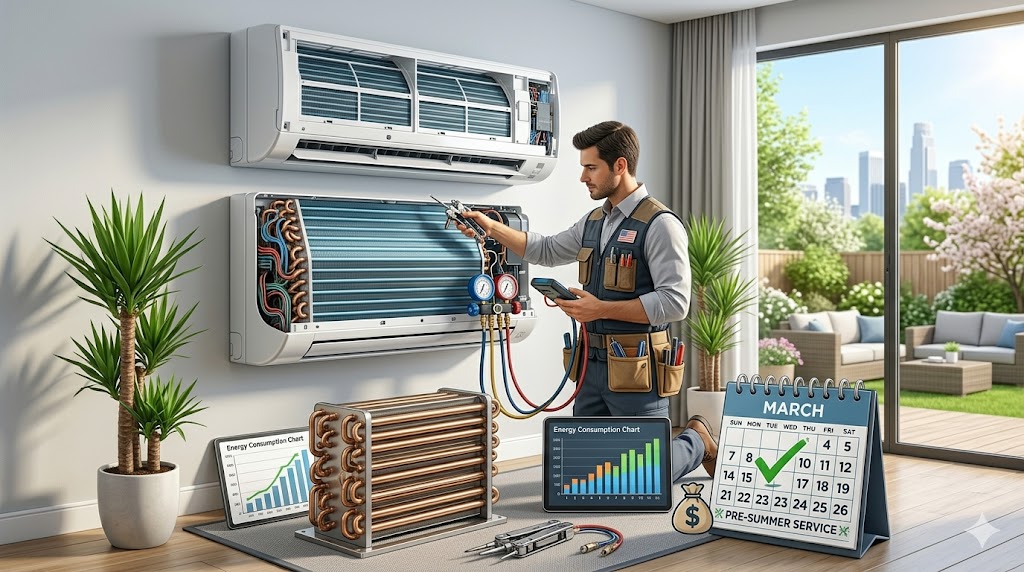
Preventive service—coil cleaning, refrigerant checks, and inspections—maintains design capacity and can improve performance by 5%–15%. Removing debris restores heat exchange and preserves equipment life.
What Key Tasks Are Included in an AC Maintenance Checklist?
Key tasks target airflow, refrigerant, and filters. Essential items include:
- Cleaning Coils: Removes dirt that impairs heat transfer.
- Checking Refrigerant Levels: Confirm proper charge for peak cooling.
- Changing Air Filters: Replace or clean filters regularly to maintain airflow.
These simple steps cut energy use and reduce the likelihood of costly repairs later in the season.
How Does Regular HVAC Tune Up Benefit Commercial AC Systems?
Commercial tune-ups stabilise cooling, reduce costs, and improve uptime. Routine inspections and adjustments keep components functioning and systems running efficiently. The benefits include:
- Improved Performance and Energy Savings: Inspections keep components working, lowering consumption.
- Reduced Risk of Breakdowns: Early detection reduces unplanned downtime.
- Increased Lifespan of the System: Proactive care preserves equipment life.
Tune-ups deliver measurable returns through reliability and efficiency.
What Are the Risks of Skipping Pre Summer AC Repair?
Skipping pre-season service raises the chance of failures, higher bills, and expensive repairs. Key risks include:
- Potential System Failures: Lack of maintenance increases breakdown risk.
- Increased Repair Costs: Small issues can escalate into major repairs.
- Reduced Energy Efficiency: Dirty or worn components drive up energy use.
Prioritise scheduled maintenance to protect system performance and budgets.
How Can Scheduled Maintenance Prevent Summer HVAC Breakdowns?
Addressing issues in advance prevents many summer breakdowns. Key practices include:
- Biannual Inspections: Inspect before cooling and heating seasons.
- Regular Filter Replacements: Maintain filters to ensure airflow.
- Coil Cleaning: Keep coils clean to improve heat exchange.
These practices lower failure risk during peak demand.
What Common Issues Trigger Commercial AC Failures During Peak Season?
Common peak-season faults include refrigerant loss, electrical faults, and airflow restrictions. These often cause commercial AC failures:
- Refrigerant Leaks: Leaks reduce cooling and can disable systems.
- Electrical Problems: Faulty wiring causes downtime and hazards.
- Airflow Restrictions: Blocked ducts or filters lead to overheating.
Prompt repairs minimise disruption and help maintain operations during peak demand.
How Does AC Repair Before Summer Lead to Energy Savings?
Pre-season repair restores efficiency; maintenance can save roughly 5%–15% of energy use. For professional support, HProServe provides reliable HVAC services.
Preventive care also reduces component wear, lowers utility costs, and improves budget predictability over the season.
What Is the Impact of Energy Efficient AC Systems on Operating Costs?
Energy-efficient systems cut monthly bills and improve reliability. The major advantages include:
- Lower Monthly Utility Bills: Uses less energy, reducing costs.
- Reduced Likelihood of Costly Repairs: Well-maintained systems need fewer major repairs.
- Long-Term Financial Benefits: Savings over time justify upgrades.
Consider long-term savings when planning upgrades or maintenance schedules.
How Much Energy Savings Can Businesses Expect from Preventive Maintenance?
Preventive maintenance can cut business energy use by about 10%–15%; consistent upkeep and monitoring are key. These savings support both financial objectives and sustainability goals, making regular maintenance a sound investment.
Why Choose Professional Commercial AC Repair Services Before Summer?
Professional services deliver preventive cost savings, improved efficiency, and longer equipment life. Engaging specialists before summer offers clear advantages:
- Cost Savings through Preventive Care: Professional care prevents major failures and saves money.
- Impact on Energy Efficiency: Pros optimise systems to lower operational costs.
- Extended Equipment Lifespan: Expert oversight prolongs service life.
Contact HProServe for comprehensive commercial HVAC support.
What Business-Specific HVAC Solutions Does HProServe Provide?
HProServe offers tailored preventive maintenance plans designed to optimise performance and energy efficiency for commercial properties.
By aligning services with business requirements, they aim to provide reliable support and minimise operational interruptions.
How Does Expert Service Support Long-Term HVAC System Longevity?
Expert service extends HVAC lifespan through targeted practices. Key strategies include:
- Regular Inspections and Maintenance: Find and fix issues early.
- Importance of Clean Filters: Filters improve efficiency and air quality.
- Optimizing System Performance: Tailored maintenance improves function and efficiency.
Routine care keeps systems dependable over time.
Frequently Asked Questions
What should I do if my AC isn’t cooling effectively, even after maintenance?
If cooling is poor after service, a refrigerant leak or faulty component may be to blame; call a licensed technician for diagnosis and repair.
How often should I schedule HVAC maintenance for my commercial AC system?
Schedule commercial HVAC maintenance at least twice yearly—before cooling and heating seasons; high-demand sites may need more frequent checks.
Are there any DIY maintenance tasks I can perform for my AC system?
DIY tasks include replacing or cleaning filters, clearing debris around outdoor units, and checking vents; leave complex inspections and repairs to professionals.
What are the signs that my AC unit needs immediate repair?
Immediate repair is needed for unusual noises, inconsistent cooling, sudden spikes in energy bills, or visible leaks—contact a technician promptly.
Can regular maintenance reduce my energy bills?
Yes—regular maintenance keeps systems efficient and typically lowers energy consumption and utility bills.
What should I consider when choosing an HVAC repair service?
Choose experienced, licensed, and insured technicians with positive reviews; ask about warranties, response times, and transparent pricing.
How can I improve the energy efficiency of my AC system beyond regular maintenance?
Improve efficiency by installing a programmable thermostat, sealing ducts, upgrading insulation, using ceiling fans, or replacing old units with energy-efficient models.
Conclusion
Scheduling pre-summer AC maintenance maximises efficiency, extends equipment life, and reduces breakdown risk and operating costs. Contact a qualified provider to schedule service and keep your system performing at its best.