By Marketing Team, HomePro Heating and Air
Deciding whether to repair or replace an air conditioning system is a major decision for business owners. This article summarises the key factors—cost, efficiency, downtime, and long-term savings—to help you choose the option that matches your operational and financial priorities, and explains how HProServe can assist.
Costs Associated with AC Repair
Typical repairs range from $150 to $1,500; routine maintenance often costs $100–$300 and extends equipment life. Emergency or complex repairs raise costs and can require more downtime.
Compare repair estimates with your budget and tolerance for interruptions. Timely repairs preserve productivity—HProServe repair services provide diagnostics and targeted solutions.
Costs Associated with AC Replacement
Replacement commonly runs $3,500–$10,000. Newer, high-efficiency systems usually lower operating costs and utility bills over time.
Financing options (offered by many providers, including HProServe) can spread the upfront cost; weigh immediate expense against projected savings and cash-flow needs.
Factors Influencing Decision-Making
Key considerations are system age, condition, repair frequency, and local parts and labour prices. Newer units tend to be more efficient; service history helps determine whether repair or replacement is more economical.
An experienced provider like HProServe can assess your facility and usage patterns to recommend the most cost-effective option.
Impact on Business Operations
Frequent breakdowns disrupt operations and incur downtime costs. Preventative maintenance reduces unexpected failures and supports steady performance.
Improved HVAC efficiency lowers energy expenses and supports profitability. Consider targeted efficiency upgrades to reduce operating costs and risks to productivity.
What Are the Key Signs Your Commercial AC Needs Repair or Replacement?
Recognising indicators early avoids emergencies. Common signs include:
- Inconsistent Cooling: Uneven temperatures across spaces may signal duct or system issues.
- System Age: Units older than ~15 years are often less efficient and may justify replacement.
- Unusual Noises or Odors: Strange sounds or smells indicate problems that need inspection.
Addressing these signs promptly preserves comfort and avoids costly downtime.
Which Common Signs Indicate AC Repair Is Required?
Repair is usually indicated by:
- Unusual Noises: Grinding, banging or rattling often point to mechanical faults.
- Reduced Airflow: Weak airflow suggests clogged filters, ducts, or fan issues.
- Rising Energy Bills: Sudden bill increases can indicate inefficiencies that repairs can fix.
When Should You Consider Full AC Replacement for Your Business?
Consider replacement when:
- Frequent Repairs: Repeated, costly fixes indicate replacement may be more economical.
- Newer Models’ Efficiency: Improved efficiency of modern units can provide meaningful savings.
- Significant Failures: Major component failures may be better resolved with a new system.
Well-timed replacement can improve reliability and reduce ongoing maintenance costs.
How Do AC Repair Costs Compare to Commercial AC Replacement Pricing?
Compare key drivers and savings:
- Typical repair costs range from $150 to $1,500.
- Replacement costs generally fall between $3,500 and $10,000; factor in long-term energy savings.
- Regional labour rates and parts availability affect both repair and replacement pricing—get local quotes.
Side-by-side comparisons help determine the most economical HVAC strategy for your business.
What Factors Influence the Cost of Commercial AC Repair?
Repair costs depend on:
- Labor Rates: Regional differences can affect total cost.
- Parts Availability: Hard-to-source parts increase expense and lead time.
- System Age: Older systems typically need more frequent, costly repairs.
Understanding these elements aids budgeting and maintenance planning.
How to Evaluate Replacement Costs and Long-Term Business Savings?
Assess replacement by reviewing:
- Upfront Costs: Equipment and installation expenses vs. planned savings.
- Energy Efficiency: Projected usage reductions and payback timelines.
- Financing Options: Terms that can preserve cash flow while upgrading.
Use a simple payback and ROI estimate to compare options objectively.
What Energy Efficient HVAC Upgrades Improve Business System Performance?
Consider upgrades such as:
- High-Efficiency Air Conditioners: New models often cut energy use.
- Variable-Speed Compressors: Match output to demand for better efficiency.
- Smart Thermostats: Optimize schedules and reduce waste.
These measures improve performance and reduce long-term operating costs.
Which Upgrades Deliver Measurable Energy Savings?
Upgrades with clear savings include:
- Duct Sealing: Reduces loss and improves system effectiveness.
- Regular Maintenance: Keeps efficiency high and prevents failures.
- Zoning Systems: Target cooling to occupied areas and cut waste.
Combined, these steps support both efficiency and sustainability goals.
How Do HVAC Smart Controls and New Standards Affect Replacement Decisions?
Smart controls enable real-time monitoring and better operational control. New efficiency standards can make older systems obsolete; confirm compliance and consider smart upgrades when replacing equipment.
- Real-Time Monitoring: Enables faster fault detection and usage optimisation.
- Compliance with New Standards: Regulatory changes may influence replacement timing.
Verify local requirements and factor smart controls into replacement planning.
How Can Businesses Make Informed Decisions Between Repair and Replacement?
Make choices by:
- Consider System Age: Older systems are likelier candidates for replacement.
- Quantitative Analysis: Compare repair costs, downtime, and replacement ROI.
- Long-Term ROI: Prioritise solutions that improve reliability and reduce total cost of ownership.
Data-driven decisions reduce operational risk and protect finances.
What Diagnostic Tools and Expert Consultations Assist Business Owners?
Useful resources include:
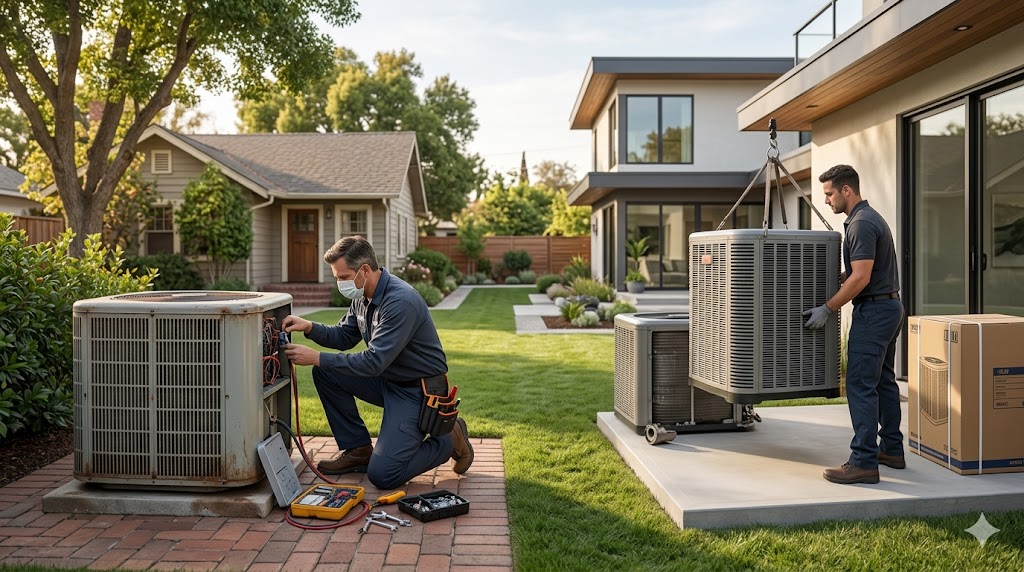
- Diagnostic Tools: Multimeters and refrigerant gauges for performance checks.
- Professional Evaluations: Certified technicians provide thorough assessments.
- Comprehensive Assessments: Full-system reviews clarify repair vs. replacement choices.
Expert diagnostics simplify decision-making and help maintain efficiency.
How Do Maintenance Plans and Case Studies Inform Business HVAC Choices?
Maintenance plans and case studies show:
- Financial Benefits: Preventative care reduces large, unexpected costs.
- Operational Efficiency Enhancement: Regular inspections sustain performance.
- Valuable Case Studies: Industry examples illustrate outcomes of different strategies.
Proactive maintenance improves reliability and long-term costs.
Frequently Asked Questions
1. What factors should I consider before deciding to repair or replace my AC system?
Evaluate system age, repair history, efficiency, expected remaining life, and the cost of repairs versus replacement. Consider operational needs and potential energy savings from newer units.
2. How can financing options ease the burden of AC replacement costs?
Financing spreads upfront costs, preserving cash flow and enabling timely upgrades that deliver long-term savings; many firms, including HProServe, offer such plans.
3. Can regular maintenance really affect the decision to repair or replace?
Yes. Regular maintenance extends equipment life, reduces failures, and can delay the need for replacement while keeping efficiency higher.
4. What environmental considerations should I take into account when replacing my AC system?
Choose energy-efficient units and approved refrigerants to lower emissions and energy use. Smart controls can further optimise consumption and support sustainability goals.
5. How does local climate influence the decision between AC repair or replacement?
Climate affects runtime and wear. In harsher climates, systems work harder and may age faster, so replacement may be more cost-effective sooner.
6. Are there specific signs I should watch for that indicate imminent AC failure?
Watch for loud mechanical noises, uneven cooling, sudden bill spikes, foul odours, or fluid leaks—these warrant prompt attention.
7. Can smart technology really improve the efficiency of my AC system?
Yes. Smart thermostats and sensors enable finer control, remote adjustments, and data-driven scheduling that lower energy use.
Conclusion
Weigh repair costs, system condition, downtime risk, and long-term savings when choosing repair or replacement. Use diagnostics and quotes to compare options; providers like HProServe can offer evaluations, financing, and tailored upgrades to support a cost-effective HVAC strategy for your business.