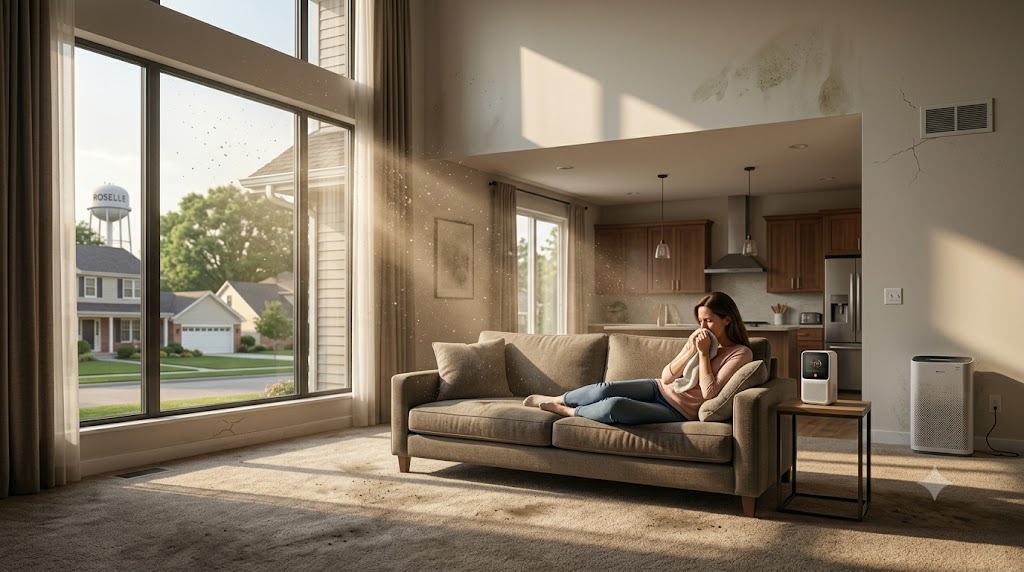
When you think about air pollution, you probably picture smog over a city skyline or exhaust fumes on a busy highway. Rarely do people think about the air inside their own living room, bedroom, or kitchen. Yet according to the EPA, indoor air can be two to five times more polluted than outdoor air — and in tightly sealed, energy-efficient modern homes, that number can climb even higher.
The unsettling part is that most indoor air pollutants are invisible and odorless. You can’t see the buildup of volatile organic compounds (VOCs) seeping from your furniture, and you can’t smell the mold spores traveling silently through your ductwork. This is exactly why so many health issues linked to indoor air go undiagnosed for months or even years. In this guide, Home Pro breaks down the hidden health risks tied to poor indoor air quality, how airborne allergens in homes affect your body, and what you can do to protect your household’s respiratory health.
Why Indoor Air Quality Deserves More Attention
Modern homes are built to be energy-efficient, which means they’re also built to be airtight. While this helps lower utility bills, it also traps pollutants inside instead of allowing them to escape. Without proper ventilation, indoor air pollutants accumulate over time, recirculating through your HVAC system and settling into every room of your home.
Unlike outdoor air quality, which is track and reported by government agencies, indoor air quality is almost entirely your responsibility to monitor. Most homeowners never test their air until symptoms become impossible to ignore, which means chronic exposure often happens long before any action is taken.
Common Indoor Air Pollutants Lurking in Your Home
Before diving into the health effects, it helps to understand exactly what’s polluting your indoor air in the first place. Some of the most common indoor air pollutants include:
- Volatile Organic Compounds (VOCs) — Released from paint, furniture, cleaning products, and air fresheners
- Mold and Mildew Spores — Thrive in damp basements, bathrooms, and poorly ventilated areas
- Dust Mites — Microscopic organisms that live in bedding, carpet, and upholstery
- Pet Dander — Tiny flecks of skin shed by cats, dogs, and other household pets
- Radon Gas — A naturally occurring radioactive gas that can seep in through foundations
- Carbon Monoxide — Produced by malfunctioning furnaces, stoves, or fireplaces
- Secondhand Smoke — Lingers in fabrics, carpets, and HVAC systems long after smoking has stopped
- Pollen — Tracked in from outside and often recirculated through HVAC systems
Each of these pollutants poses its own set of risks, but together, they create a cumulative burden on your body that can manifest in surprising ways.
The Hidden Health Risks You Might Be Overlooking
1. Chronic Respiratory Issues
Prolonged exposure to indoor air pollutants is one of the leading contributors to declining respiratory health. Airborne particles like dust, mold spores, and VOCs irritate the lining of the lungs and airways, leading to chronic coughing, wheezing, or shortness of breath. Over time, this irritation can contribute to the development or worsening of conditions like asthma, bronchitis, and chronic obstructive pulmonary disease (COPD).
The connection between respiratory health and indoor air is especially concerning because symptoms often develop gradually. Many people simply assume they’re catching frequent colds or dealing with seasonal allergies, without realizing their own home is the underlying trigger.
2. Worsening Allergies and Asthma Attacks
Airborne allergens in homes — including dust mites, pet dander, mold spores, and pollen — are among the most common triggers for allergy and asthma flare-ups. Unlike outdoor allergens, which fluctuate with the seasons, indoor allergens can persist year-round, especially in homes with inadequate filtration or infrequent HVAC maintenance.
For individuals with asthma, exposure to these allergens can trigger attacks that range from mild discomfort to medical emergencies. Children, in particular, are more vulnerable, as their developing lungs are more sensitive to airborne irritants.
3. Increased Risk of Infections
Indoor air pollutants don’t just irritate the lungs — they can also weaken the body’s ability to fight off respiratory infections. Homes with poor ventilation allow viruses and bacteria to linger in the air longer, increasing the likelihood of transmission between household members. Mold exposure, in particular, has been linked to increased susceptibility to respiratory infections due to its impact on immune response.
4. Headaches, Fatigue, and Brain Fog
VOCs released from paint, furniture, and cleaning products can cause more than just respiratory discomfort. Many people report headaches, dizziness, fatigue, and difficulty concentrating after prolonged exposure to these chemical pollutants. Because these symptoms are so general, they’re often misattributed to stress, dehydration, or lack of sleep, when the real culprit may be the air circulating through the home.
5. Skin and Eye Irritation
Airborne allergens and chemical pollutants don’t just affect your lungs — they can also irritate your skin and eyes. Dry, itchy skin, red or watery eyes, and unexplained rashes are common complaints in homes with poor air quality, particularly in environments with high VOC concentrations or excessive dust buildup.
6. Sleep Disruption
Respiratory health and indoor air quality are closely tied to sleep quality. Airborne allergens like dust mites are especially concentrate in bedding and mattresses, making bedrooms one of the most allergen-dense rooms in the house. Nighttime coughing, congestion, and irritated airways can significantly disrupt sleep, leading to daytime fatigue and reduced overall wellbeing.
7. Long-Term Cardiovascular Concerns
Emerging research suggests that long-term exposure to fine particulate matter indoors may also affect cardiovascular health, contributing to increased blood pressure and inflammation. While outdoor air pollution has been studied more extensively in this area, indoor air pollutants — especially from combustion sources like gas stoves and fireplaces — are increasingly recognized as a contributing factor.
8. Weakened Immune Response in Children and the Elderly
Children and elderly individuals are particularly vulnerable to the health risks associated with poor indoor air quality. Children’s respiratory systems are still developing, making them more susceptible to long-term damage from airborne pollutants. Elderly individuals, meanwhile, often have weaker immune systems and pre-existing health conditions that can be exacerbated by poor air quality, making home air quality a critical consideration for multi-generational households.
How Airborne Allergens in Homes Build Up Over Time
Airborne allergens in homes don’t just appear overnight — they accumulate gradually, often driven by everyday habits and household conditions:
- Infrequent HVAC filter changes allow dust and allergens to recirculate instead of being filtered out
- Poor ventilation traps moisture, encouraging mold and dust mite growth
- Carpeting and upholstery trap allergens deep within fibers, making them harder to remove with regular cleaning
- Pets shed dander continuously, especially in homes without regular grooming routines
- Closed windows and sealed homes prevent fresh air exchange, allowing pollutant levels to climb
Over time, these factors compound, creating an environment where airborne allergens in homes become a near-constant presence rather than an occasional nuisance.
Protecting Your Family’s Respiratory Health
The good news is that most of these hidden health risks are preventable with the right approach to indoor air management. Here are steps Home Pro recommends for reducing indoor air pollutants and protecting respiratory health:
- Schedule Professional Air Quality Testing — Understanding exactly which indoor air pollutants are present in your home is the first step toward addressing them effectively.
- Upgrade Your HVAC Filtration — High-efficiency filters capture significantly more dust, dander, and particulates than standard filters.
- Improve Ventilation — Mechanical ventilation systems help exchange stale indoor air for fresh outdoor air, reducing pollutant buildup.
- Control Humidity Levels — Keeping indoor humidity between 30% and 50% helps prevent mold growth and dust mite proliferation.
- Clean and Maintain HVAC Ducts — Dust and allergens often accumulate in ductwork, recirculating throughout the home with every heating and cooling cycle.
- Reduce Chemical Exposure — Choosing low-VOC paints, cleaning products, and furniture can significantly reduce chemical pollutant levels indoors.
- Groom Pets Regularly — Frequent brushing and bathing help minimize the amount of dander released into the air.
Why Professional Air Quality Solutions Matter
While some steps can be taken independently, addressing the full scope of indoor air pollutants often requires professional expertise. A trained technician can identify sources of contamination that aren’t immediately obvious, such as hidden mold growth behind walls, leaks within ductwork, or ventilation imbalances that allow pollutants to concentrate in specific rooms.
At Home Pro, our approach goes beyond simply installing a filter or recommending a quick fix. We assess your home holistically, considering your HVAC system, ventilation, humidity levels, and specific health concerns to develop a tailored plan that addresses the root causes of poor air quality — not just the symptoms.
Final Thoughts: Don’t Let Invisible Risks Go Unchecked
The health risks associate with poor indoor air quality are often hidden in plain sight — mask as seasonal allergies, unexplain fatigue, or minor respiratory irritation. But left unaddressed, chronic exposure to indoor air pollutants and airborne allergens in homes can have lasting effects on respiratory health, immune function, and overall wellbeing.
If you or your family members have been experiencing unexplained symptoms, it may be time to take a closer look at what’s really in your home’s air. Home Pro is here to help you identify hidden pollutants, improve your home’s ventilation and filtration, and create a healthier living environment for everyone under your roof.
Concerned about your home’s air quality?
Contact Home Pro today to schedule a comprehensive indoor air assessment and take the first step toward cleaner, healthier air.
Frequently Asked Questions
What are the most common indoor air pollutants found in homes?
The most common include VOCs, mold spores, dust mites, pet dander, radon, and combustion byproducts like carbon monoxide from stoves and fireplaces.
Can poor indoor air quality cause long-term health problems?
Yes. Chronic exposure to indoor air pollutants has been link to respiratory conditions, cardiovascular concerns, weakened immune response, and worsened allergies or asthma over time.
How do airborne allergens in homes affect children differently than adults?
Children have developing respiratory systems that are more sensitive to airborne irritants, making them more vulnerable to long-term effects from allergens and pollutants.
How can I improve respiratory health and indoor air quality at home?
Improving ventilation, upgrading HVAC filtration, controlling humidity, and scheduling professional air quality testing are all effective ways to reduce indoor pollutants and support better respiratory health.