Choosing an air conditioner used to mean picking between a window unit and central air. Today there are more options, and the right one depends on your home’s layout, whether you already have ductwork, and how much of the house you need to cool. Recent summer heat waves have also pushed more Portland Metro homeowners to add cooling to homes that never had it. This guide walks through each type so you can narrow your choices before you talk to a professional.
Quick Take
- Central air and ductless mini splits cool the whole home, while window, portable, and wall units cool single rooms.
- Your existing ductwork is the biggest factor in which type makes sense.
- A heat pump can both cool and heat, which is worth considering if you are replacing more than one system.
Whole-Home Cooling Options
If you want to cool most or all of your house, these are the main choices:
- Central split system: An outdoor condenser connects to an indoor coil, usually mounted at the furnace or air handler, and cooled air travels through your ducts to every room. It is the most common whole-home system and works best when the ductwork is in good shape.
- Packaged system: All the components sit in a single outdoor cabinet that connects to the home through ducts. It is often used where there is no room for an indoor coil.
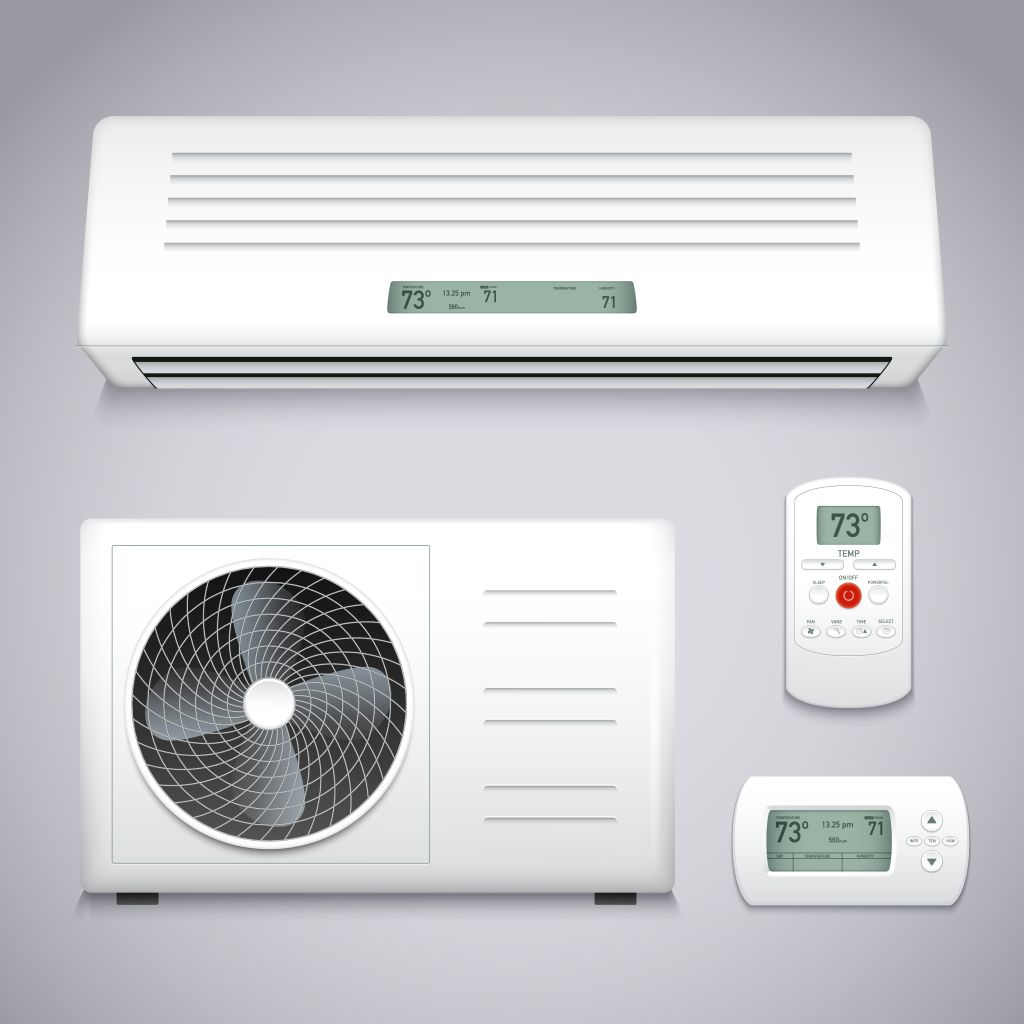
- Ductless mini split: An outdoor unit connects through a small line set to one or more wall-mounted indoor units. No ducts are needed, and each indoor unit can be controlled separately, which suits additions, older homes, and zoned cooling.
- Heat pump: A heat pump cools like an air conditioner in summer, then reverses to provide heat in winter. In a mild climate like ours, it is a common choice when a home needs both.
Our cooling services cover installation, repair, and maintenance for central air, ductless mini splits, and heat pumps. If your ductwork is leaking or undersized, fixing it can matter as much as the equipment itself, and our ductwork installation team can help with that side of the project.
Single-Room Options
When you only need to cool one space, such as a bedroom, an office, or an apartment, a smaller unit can be enough:
- Window unit: This has the lowest upfront cost and is quick to install, but it blocks the window, can be noisy, and may not be allowed in some buildings.
- Portable unit: A portable unit sits on the floor and vents hot air through a hose. It is flexible for renters, though portable units tend to be less efficient than window units.
- Through-the-wall unit: This sits in a sleeve cut into an exterior wall, so it stays in place without taking over a window. It does need a permanent opening in the wall.
These units can solve a hot room without a large project, but cooling several rooms this way adds up in cost, noise, and electricity use.
Comparing the Main Types
| Type | Best for | Ductwork needed? | Main trade-off |
|---|---|---|---|
| Central split | Whole home with ducts | Yes | Leaky ducts waste cooled air |
| Ductless mini split | Homes without ducts, additions, zones | No | Indoor units are visible on the wall |
| Heat pump | Homes needing heating and cooling | Ducted or ductless | Needs proper sizing for your home |
| Window unit | One room on a tight budget | No | Blocks a window and cools one space |
| Portable unit | Renters and temporary needs | No | Louder and less efficient |
| Through-the-wall | One room, permanent setup | No | Needs an opening in the wall |
How to Choose the Right Type
No type is best for every house. These are the questions that usually settle the decision:
- Existing ductwork: If your ducts are in good condition, central air is often the simplest path. If you have none, a mini split avoids the cost of building a duct system.
- Size and layout: Open floor plans suit central air, while homes with several separate zones or an addition may suit mini splits.
- Heating needs: If your furnace is also aging, a heat pump may let you replace both systems with one.
- Noise and appearance: Central air keeps equipment out of sight, while mini splits put an indoor unit on the wall.
- Controls: Central systems and mini splits both pair well with thermostats and smart controls for scheduling and remote adjustment.
- Budget: Compare upfront cost against operating cost. A cheaper unit that runs inefficiently can cost more over its life.
Sizing matters more than most people expect. An air conditioner that is too large cools the air quickly and shuts off before it removes humidity, while one that is too small runs constantly and never catches up. A proper load calculation by a technician is more reliable than guessing by square footage. If you already have an older system and are weighing your options, our post on AC repair vs AC replacement can help you decide.
Frequently Asked Questions
Which type of air conditioner is the most efficient?
Efficiency is rated by SEER2, and higher numbers mean better efficiency. Ductless mini splits and some heat pumps score well partly because they avoid duct losses, but results vary by model and installation, so compare the rating on the specific unit you are considering.
Can I add central air to a home that has a furnace?
Often yes, if your ductwork and furnace blower are compatible with an AC coil. A technician needs to check duct size, airflow, and equipment compatibility before confirming.
What is the difference between an air conditioner and a heat pump?
An air conditioner only cools. A heat pump cools in summer and can also heat in winter by reversing the flow of refrigerant.
Are window units a good long-term solution?
They work well for a single room or short-term need, but they are not designed to cool a whole home and can be less efficient and noisier than permanent systems.
What size air conditioner do I need?
It depends on your home’s size, insulation, windows, and layout. A technician can run a load calculation to find the right capacity instead of relying on a rough square footage chart.
Ready to Get Started?
Not sure which type of air conditioner fits your home? The team at HomePro Heating and Air can help you compare your options: Contact Us.