
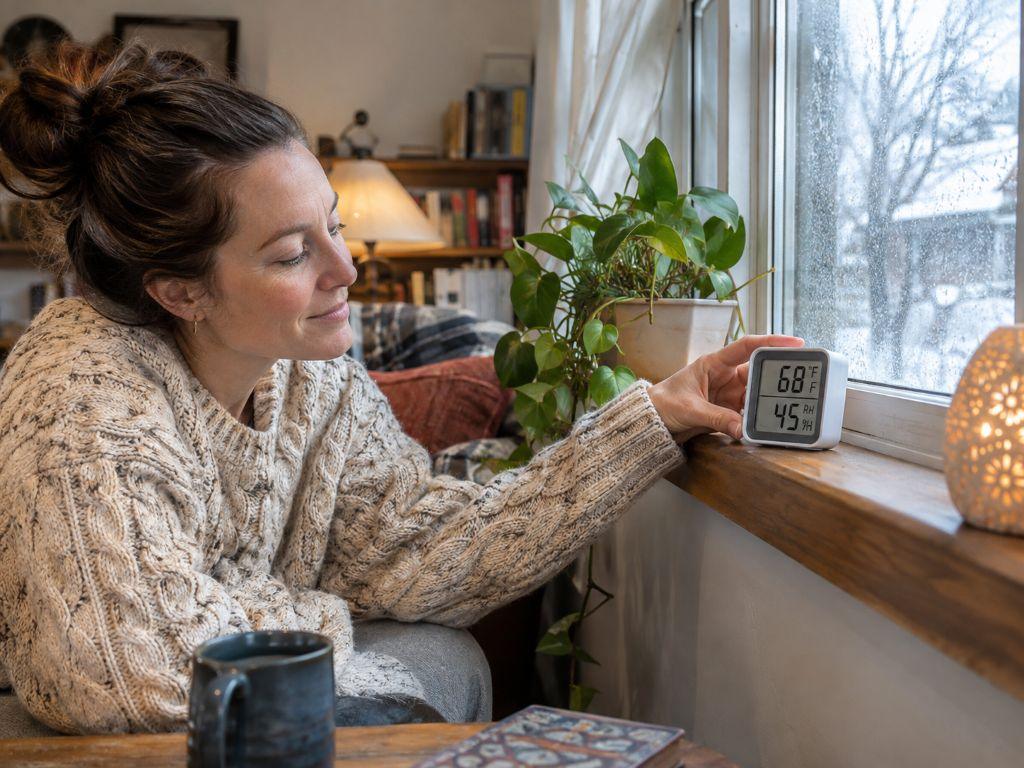
Portland winters are damp outside, yet many heated homes still feel dry inside. Dry skin, static shocks and a scratchy throat are the usual clues. At the other extreme, too much moisture in a cold house leads to foggy windows and damp corners.
Humidity affects comfort, your home and your heating bill, so it is worth knowing the target. This guide explains the recommended range, how to tell when your home is outside it, and the safe ways to raise or lower the number.
Quick Take
- A common recommendation for indoor humidity is 30 to 50 percent, with the lower end of that range better in cold weather.
- Measure it with a hygrometer before you change anything, and fix the cause rather than the symptom.
The Ideal Indoor Humidity Range
Relative humidity is the amount of moisture in the air compared with the most it can hold at that temperature. Public health guidance, including the EPA, generally recommends keeping indoor humidity between 30 and 50 percent.
In winter the upper limit matters. When the outdoor air is cold, warm and humid indoor air meets cold windows and walls and turns into water. Many homes do better near 30 to 40 percent during the coldest weeks so that moisture does not collect on glass and in corners.
Signs Your Humidity Is Too Low
- Dry skin, lips and eyes. A common sign in heated homes.
- Static shocks. They are more frequent in dry air.
- A dry nose or throat in the morning. Dry air can irritate airways.
- Wood changes. Floors, trim and furniture can shrink and show gaps.
- Struggling houseplants that dry out faster than usual.
Heating is the usual cause. As outdoor air is warmed to room temperature, its relative humidity drops, so a home can feel dry even when the weather outside is wet.
Signs Your Humidity Is Too High
- Condensation on windows. Water on the inside of the glass means moisture has nowhere to go.
- A musty smell, especially in basements, closets and bathrooms.
- Damp spots, peeling paint or visible mold. These need a fix for the moisture source and a proper cleanup.
- A clammy feel even when the room is warm.
If your readings are high rather than low, a humidifier is the wrong tool. Better ventilation, using exhaust fans and fixing moisture sources come first. A technician can look at your indoor air quality options if the problem keeps coming back.
How to Measure Indoor Humidity
A hygrometer is a small, low-cost device that shows relative humidity. Place one in the main living area, away from the kitchen, bathroom and heating vents, and check it over a few days. Reading in more than one room helps, because basements and bedrooms often differ. Do not guess from how you feel; the numbers tell you whether your home needs a change.
Safe Ways to Raise Indoor Humidity
If your readings are consistently below 30 percent, choose the option that fits your home and the effort you want to put in. The table compares the common choices.
| Option | Best for | Watch out for |
|---|---|---|
| Portable humidifier | One room, such as a bedroom | Needs daily refilling and regular cleaning to avoid buildup |
| Whole house humidifier on the furnace | Steady humidity across the whole home | Needs professional installation and yearly care |
| Air-drying laundry indoors | A small, occasional boost | Adds moisture only while the laundry dries |
| Houseplants | A minor boost in one area | Effect is small and not a fix on its own |
Whichever option you choose, set a target near the lower half of the recommended range in cold weather and recheck with the hygrometer. Over-humidifying is as much a problem as dry air.
Humidity and Your Health and Home
Comfort is the most noticeable effect, but humidity touches other parts of the home too. Air that is too dry can irritate the nose and throat, and it can make wood floors, cabinets and musical instruments shrink and crack. Air that is too humid supports dust mites and mold, and it can damage drywall, paint and insulation over time.
Staying inside the recommended range protects both people and materials. It also affects how warm the home feels. Slightly more humid air can feel comfortable at a lower thermostat setting, while very dry air tends to feel colder, so people turn the heat up and use more energy.
A Simple Winter Humidity Checklist
- Buy a hygrometer and place it in the main living area.
- Record the reading each morning for one week.
- Look at the windows. Condensation means the reading is too high for the outdoor temperature.
- Run bathroom and kitchen fans during showers and cooking to move moisture out.
- Adjust gradually. Change one thing at a time and recheck after a few days.
- Call a professional if the numbers do not respond or you see mold.
This routine takes only a few minutes a day and gives you real data before you spend money on equipment. It also gives a technician something concrete to work from if you do decide to call, which makes the visit shorter and the recommendation more accurate.
Why Humidity Changes From Room to Room
Readings are rarely the same throughout a house. Bedrooms with closed doors, basements, rooms over a garage and spaces far from the furnace can all differ by several points. A kitchen or bathroom will spike during cooking and showers and then drop again. That is why a single reading in one corner does not tell the full story.
If one area is always damp or always dry, look at what is different about it: airflow, insulation, window quality, a moisture source or a closed vent. Fixing the local cause is usually more effective than changing the whole home’s humidity target.
How Your Heating System Affects Humidity
A furnace does not add moisture, and it often dries the air as it warms it. A tight home holds moisture in. A leaky home loses it and runs the furnace harder. Your heating system, ventilation and thermostat settings work together, which is why humidity is best looked at as part of the whole system.
Before the cold season, a tune-up helps the furnace run properly, and a technician can explain whether a whole house humidifier makes sense for your home. You can read about this service on our heating services page. Setting the temperature steadily, for example with a smart thermostat, also helps avoid big swings in comfort and moisture.
Frequently Asked Questions
What is the best indoor humidity in winter?
A common target is 30 to 50 percent, and many homes do better near 30 to 40 percent in the coldest weather to prevent condensation on windows.
Why is my house so dry in winter?
Heating warms the air and lowers its relative humidity. Leaky homes also lose moisture to outdoor air.
Is low humidity bad for my home?
Very dry air can shrink wood floors and trim, and it can make static shocks and dry skin more common.
Can I use a humidifier every day?
Yes, if you keep it clean and watch your readings. Over-humidifying leads to window condensation and damp spots.
When should I call a professional about humidity?
Call if readings stay too low or too high, if you see recurring condensation or mold, or if you want a whole house system installed.
Ready to Get Started?
If dry air or damp spots keep coming back, HomePro Heating & Air can look at your system and give you a clear estimate before any work begins. Contact Us