By Marketing Team, HomePro Heating and Air
Reliable air conditioning is essential for Portland Metro businesses. Spotting repair needs early reduces downtime, protects comfort for staff and customers, and preserves system efficiency. This article summarizes common commercial AC signs, energy-efficiency indicators, and the diagnostics that guide timely repairs.
What Are the Early Warning Signs of Commercial AC System Failure?
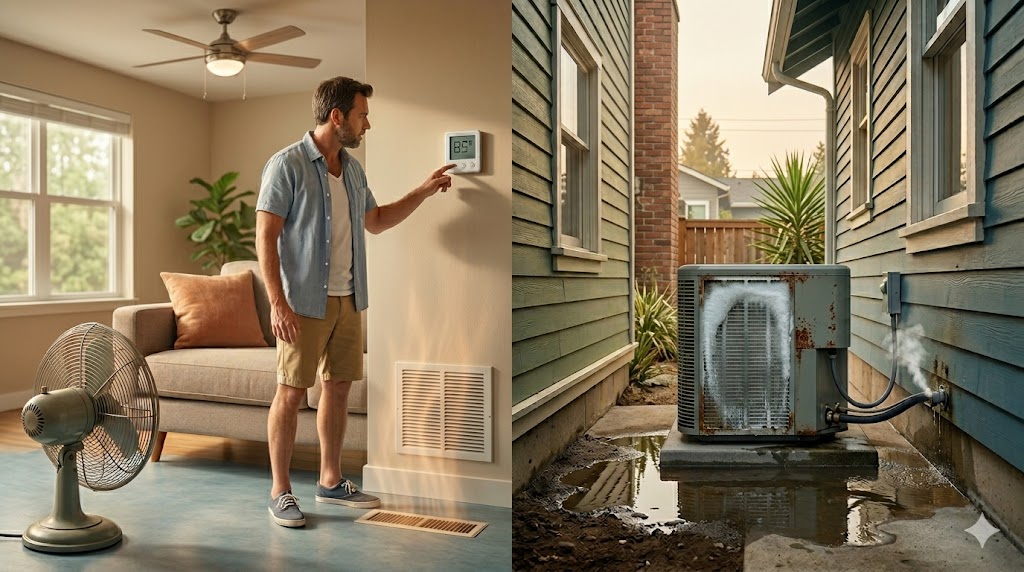
Early symptoms — unusual noises, temperature swings, or rising energy bills — typically indicate underlying faults that should be investigated promptly.
| Sign (Symptom) | Recommended Action | Urgency |
|---|---|---|
| Unusual Noises | Contact a technician for diagnostics | High |
| Inconsistent Cooling | Check filters and refrigerant levels | Medium |
| Increased Energy Bills | Schedule an evaluation to identify leaks | High |
Monitor these signs and arrange service when needed. For professional assistance, contact HProServe at (503) 218-3303.
How to Identify Airflow Problems and Compressor Failures
Weak cooling or uneven temperatures often point to blocked ducts, a failing blower, or compressor strain. Watch for higher utility costs that indicate the compressor is overworking.
- Insufficient Airflow: Warmer zones usually mean duct or blower issues.
- High Energy Bills: A sign compressors compensate for poor airflow.
- Overheating: May indicate restricted refrigerant flow or airflow obstructions.
If you suspect these problems, schedule a professional HVAC service for a full inspection.
Which Operational Changes Indicate Energy Efficiency Decline?
Declining efficiency often shows as repeated service calls, frequent filter changes with no improvement, or unexplained energy spikes. These symptoms warrant a regular maintenance schedule to prevent escalation.
- Frequent service calls
- Regular filter changes without improvement
- Unexplained fluctuations in energy usage
Set a routine maintenance schedule to reduce inefficiencies.
How Does HVAC Troubleshooting in Portland Diagnose AC Repair Needs?
Local technicians account for Portland’s climate when troubleshooting. Typical checks include refrigerant levels, ductwork inspection for leaks, and electrical component testing to pinpoint failure causes.
What Diagnostic Methods Detect Refrigerant Leaks and Electrical Issues?
Technicians use targeted diagnostics to find faults accurately and reduce downtime.
- Pressure Testing: Checks refrigerant pressure for anomalies.
- Visual Inspections: Identifies wear, corrosion, or damage.
- Electrical Testing: Verifies capacitors, contactors, and other components.
These methods allow early detection and lower repair costs.
When Should Businesses Schedule Professional HVAC Evaluations?
Schedule evaluations when cooling capacity drops, after major temperature swings, or following repairs to confirm issues are resolved.
- Experiencing System Inefficiencies: Prioritise evaluation when capacity diminishes.
- After Significant Temperature Changes: Climate swings can affect system balance.
- Following Any Repairs: Post-repair checks ensure completeness.
Regular professional checks help prevent breakdowns and extend equipment life.
What Is the Impact of Air Conditioner Maintenance Warning Signs on Business Operations?
Neglected maintenance can disrupt operations, create safety hazards, raise operating costs, and lower employee productivity. Regular service improves system life, efficiency, and occupant comfort.
- Safety hazards from malfunctioning equipment
- Increased operational costs due to inefficient performance
- Reduced employee productivity in poorly conditioned environments
Scheduled maintenance mitigates these risks and protects your investment.
How Does Delayed Repair Affect Energy Costs and System Longevity?
Delaying repairs raises energy use and can shorten equipment lifespan. Addressing small issues early prevents larger, costlier failures and preserves cooling performance.
- Higher Repair Costs: Small problems can escalate into major failures.
- Decreased Lifespan: Ongoing strain shortens system life.
- Inefficient Cooling: Impacts comfort and can reduce patronage.
Prompt repairs and regular service maintain long-term health and efficiency.
Why Is Fast Response Critical for Commercial AC Repair in Portland?
A rapid response limits business disruption and uncomfortable conditions for customers and staff. Keep a reliable service contact, such as HProServe, for emergency needs.
Where Can Portland Businesses Find Reliable AC Repair Services?
Choose providers based on reputation, commercial expertise, and emergency availability to ensure consistent performance.
- Reputation: Look for established companies with good reviews.
- Expertise: Technicians should be experienced with commercial systems.
- Emergency Services: Providers should offer prompt emergency repair.
HProServe offers professional service and support; call (503) 218-3303 for assistance.
What Should You Expect from Professional Commercial AC Repair Providers?
Expect thorough assessments, transparent communication about diagnosis and costs, and follow-up care to confirm repairs.
- Quality Assessment: Comprehensive evaluations to identify issues.
- Transparent Communication: Clear explanations of options and pricing.
- Follow-Up Care: Post-repair checks and support.
These standards help businesses secure consistent, reliable service.
How to Contact HProServe for Expert HVAC Repair Solutions in Portland?
To request prompt HVAC repair from HProServe, use the contacts below:
- Phone: (503) 218-3303
- Email: Koby@hproserve.com
HProServe professionals are ready to assist with commercial HVAC needs and deliver dependable service.
Frequently Asked Questions
1. What are the benefits of regular AC maintenance for businesses?
Regular maintenance improves efficiency, extends equipment life, reduces energy bills, and helps avoid costly repairs by catching issues early.
2. How often should businesses schedule HVAC evaluations?
Schedule evaluations at least twice yearly—before summer and winter—and anytime performance changes are noticed.
3. What are the common mistakes businesses make regarding AC repair?
Common mistakes include delaying repairs, ignoring unusual noises or temperature swings, and hiring unqualified technicians.
4. How can businesses improve their AC system’s energy efficiency?
Improve efficiency with routine maintenance, sealed ductwork, proper insulation, programmable thermostats, and replacing outdated units when appropriate.
5. What signs indicate that an AC unit is nearing the end of its lifespan?
Frequent breakdowns, inconsistent cooling, rising energy bills, persistent noises, or recurring refrigerant leaks suggest it may be time to replace the unit.
6. Are there financing options for AC repair and replacement?
Many providers offer financing plans, including monthly payments or promotional interest options—ask your HVAC provider for details.
7. How can businesses ensure compliance with local HVAC regulations?
Work with certified HVAC professionals familiar with local codes and stay informed of regulatory changes to maintain compliance.
Conclusion
Recognising repair signs and acting quickly preserves efficiency, comfort, and business continuity. Maintain a proactive service plan and consult qualified technicians when issues arise to protect your investment and ensure reliable performance.