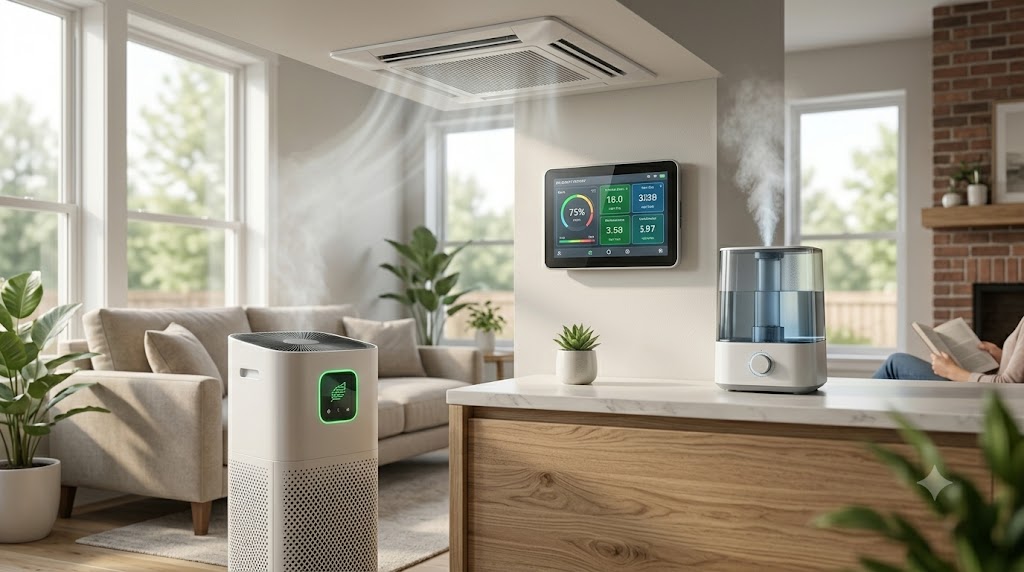
Once you’ve recognized that your home’s air quality needs attention, the next challenge begins: figuring out which service actually fits your situation. The indoor air quality industry offers a wide range of options, from basic filter upgrades to whole-home purification systems, and not every solution is right for every household. Choosing the wrong service can mean wasted money, unresolved symptoms, and a false sense that the problem has been handled.
At Home Pro, we’ve seen homeowners make this decision both ways — some jump straight to an expensive whole-home system without ever testing what’s actually in their air, while others settle for a cheap filter swap that barely scratches the surface of a deeper ventilation issue. This guide walks you through how to evaluate your options, starting with professional indoor air quality testing, moving through residential air purification services, and ending with long-term HVAC indoor air quality improvements — so you can make a decision based on facts, not guesswork.
Start With Data, Not Assumptions
The single biggest mistake homeowners make is choosing a solution before understanding the problem. It’s tempting to buy a popular air purifier because a neighbor recommended it, or to assume duct cleaning will fix everything because it sounds thorough. But indoor air issues vary enormously from home to home depending on age, construction, climate, ventilation design, and lifestyle factors like pets or smoking.
This is why professional indoor air quality testing should always be the starting point. Testing identifies:
- The specific pollutants present (particulates, VOCs, mold spores, allergens)
- Carbon monoxide and carbon dioxide concentrations
- Humidity levels and moisture-related risks
- Ventilation efficiency throughout the home
- Whether the HVAC system itself is contributing to the problem
Without this information, any purification system or HVAC upgrade you choose is essentially a guess. With it, you can select services that directly target your home’s actual issues.
Step 1: Professional Indoor Air Quality Testing
What It Involves
A proper testing process goes well beyond a quick sniff test or a store-bought monitor. Professional indoor air quality testing typically includes:
- Initial Walkthrough — Technicians assess visible risk factors like moisture stains, mold, and ventilation blockages.
- Air Sampling — Devices measure particulate matter, VOC concentrations, and biological contaminants like mold spores.
- Humidity and Airflow Analysis — Checking whether your home’s moisture balance and air circulation meet healthy standards.
- HVAC System Review — Inspecting filters, ductwork, and equipment condition to identify whether the system is helping or hurting air quality.
- Detailed Reporting — A clear summary of findings with prioritized recommendations.
Why It Matters Before Choosing a Service
Skipping testing is a bit like visiting a doctor and requesting a treatment before any diagnosis. You might get lucky, but more often you’ll end up treating the wrong problem. For example, a family assuming their allergy symptoms come from dust might actually be dealing with a mold issue hidden behind a wall — something only proper testing would reveal. Testing ensures that whatever comes next, whether it’s residential air purification services or HVAC indoor air quality improvements, is targeted and effective.
Step 2: Understanding Residential Air Purification Services
Once testing identifies specific pollutants, residential air purification services become the next logical step for many homes. These services vary widely in scope and technology, so it helps to understand the main categories.
Portable Air Purifiers
Best suited for single rooms or smaller living spaces, portable units use HEPA filtration to capture particulates like dust, pollen, and pet dander. They’re a reasonable entry point but offer limited coverage for whole-home issues.
Whole-Home Air Purification Systems
Installed directly into your HVAC ductwork, these systems treat air throughout the entire home rather than isolated rooms. They typically combine multiple technologies, including:
- HEPA-grade filtration for particulate capture
- UV-C light purification to neutralize mold, bacteria, and viruses
- Activated carbon filtration to reduce VOCs and odors
Whole-home systems are ideal for households dealing with widespread allergy symptoms, chronic musty odors, or families with respiratory sensitivities.
Electronic Air Cleaners
These use an electrostatic charge to trap airborne particles, offering an alternative to traditional filters with lower maintenance requirements in some cases, though they require regular cleaning to remain effective.
Choosing Between Options
The right residential air purification services depend on your test results. High particulate counts may call for HEPA-based systems, while elevated mold spore levels may point toward UV-C purification combined with moisture control. A qualified technician can match your specific test findings to the appropriate purification technology rather than recommending a generic solution.
Step 3: HVAC Indoor Air Quality Improvements
Air purification addresses what’s already in the air, but HVAC indoor air quality improvements address the root causes — poor filtration, inadequate ventilation, and system inefficiencies that allow pollutants to build up in the first place.
Common HVAC Improvements Include:
Filter Upgrades Switching from a basic fiberglass filter to a MERV-13 or HEPA-rated filter dramatically increases particulate capture, though it’s important to confirm your system can handle the increased airflow resistance.
Duct Cleaning and Sealing Over time, ducts accumulate dust, debris, and sometimes mold. Cleaning removes this buildup, while sealing leaks prevents contaminated air from surrounding spaces (like attics or crawl spaces) from entering your duct system.
Ventilation Enhancements Many homes, especially newer, tightly sealed ones, don’t exchange indoor and outdoor air efficiently enough. Mechanical ventilation systems like energy recovery ventilators (ERVs) bring in fresh air while minimizing energy loss.
Humidity Control Integration Whole-home humidifiers or dehumidifiers integrated directly into your HVAC system maintain the ideal 30-50% humidity range, reducing mold risk and improving comfort.
Smart Thermostat and Air Quality Monitoring Modern systems can include sensors that continuously monitor air quality metrics, alerting you to issues before they become noticeable problems.
Why HVAC Improvements Matter Long-Term
Purification systems treat symptoms, but HVAC improvements treat the underlying cause. A home with a poorly maintained or outdated HVAC system will continue generating air quality issues no matter how many purifiers are installed. Addressing the system itself ensures lasting results rather than a temporary fix.
How to Match Services to Your Specific Situation
Every home is different, so here’s a general framework for how findings from professional indoor air quality testing typically translate into recommended services:
| Test Finding | Recommended Service |
|---|---|
| High particulate matter (dust, pollen) | HEPA filtration, whole-home air purifier |
| Elevated mold spore counts | UV-C purification, humidity control, duct cleaning |
| High VOC levels | Activated carbon filtration, improved ventilation |
| Poor humidity balance | Whole-home humidifier/dehumidifier |
| Aging or inefficient HVAC system | HVAC indoor air quality improvements, system upgrade |
| Leaky or dirty ductwork | Duct sealing and cleaning |
This kind of tailored approach avoids wasted spending on services that don’t address your home’s actual issues.
Questions to Ask Before Hiring an Indoor Air Quality Service Provider
Not all providers offer the same level of expertise or transparency. Before committing to any service, consider asking:
- Do you conduct professional indoor air quality testing before recommending solutions?
- What certifications do your technicians hold?
- Can you explain, in plain language, what my test results actually mean?
- Will you provide a written report with prioritized recommendations?
- Do you offer both residential air purification services and HVAC indoor air quality improvements, or only one?
- What ongoing maintenance is required after installation?
- Do you offer follow-up testing to confirm improvements?
A trustworthy provider should welcome these questions and provide clear, specific answers rather than vague reassurances.
The Cost of Getting It Wrong
Choosing the wrong indoor air quality service isn’t just a financial setback — it can mean continuing to live with the very symptoms and hazards you were trying to solve. Common consequences of a mismatched solution include:
- Persisting allergy or respiratory symptoms despite new equipment
- Continued mold growth due to unaddressed humidity issues
- Higher energy bills from an inefficient HVAC system
- Wasted investment in purification technology that doesn’t match your actual pollutants
This is why a data-first approach, starting with proper testing, remains the most reliable path toward genuine improvement.
Why Home Pro Is the Right Partner for This Process
At Home Pro, we guide homeowners through each step of this decision-making process rather than pushing a one-size-fits-all package. Our approach includes:
- Thorough, professional indoor air quality testing using calibrated diagnostic equipment
- Honest recommendations based on your specific test results, not a sales quota
- A full range of residential air purification services, from portable units to whole-home systems
- Comprehensive HVAC indoor air quality improvements, including duct cleaning, filtration upgrades, and ventilation solutions
- Follow-up testing to confirm that recommended solutions are actually working
We believe informed homeowners make better decisions, which is why our process always starts with clear answers about what’s really in your air before recommending how to fix it.
Final Thoughts: Make the Decision With Confidence
Choosing the right indoor air quality service doesn’t have to feel overwhelming. By starting with professional indoor air quality testing, understanding your options among residential air purification services, and considering long-term HVAC indoor air quality improvements, you can build a plan that actually solves your home’s specific issues rather than guessing at a fix.
If you’re ready to stop guessing and start breathing easier, the team at Home Pro is here to help you test, understand, and improve your home’s air quality from the ground up.
Take the first step today — contact Home Pro to schedule your professional indoor air quality testing and get a clear, personalized plan for a healthier home.
Frequently Asked Questions
Do I need testing before purchasing an air purifier?
Yes. Testing ensures the purifier you choose actually targets the pollutants present in your home, rather than addressing the wrong issue.
How do I know if I need a whole-home system versus a portable unit?
This depends on the scope of the problem. Widespread issues across multiple rooms usually call for whole-home solutions, while isolated concerns in one space may be manageable with a portable unit.
Can HVAC improvements alone fix my air quality issues?
In many cases, yes, especially when the root cause is poor filtration or ventilation. However, some situations, like existing mold contamination, may require additional purification services alongside HVAC upgrades.
How often should I retest my indoor air quality after making improvements?
Most providers recommend a follow-up test within a few months of installing new equipment or completing HVAC upgrades to confirm the improvements are working as intended.