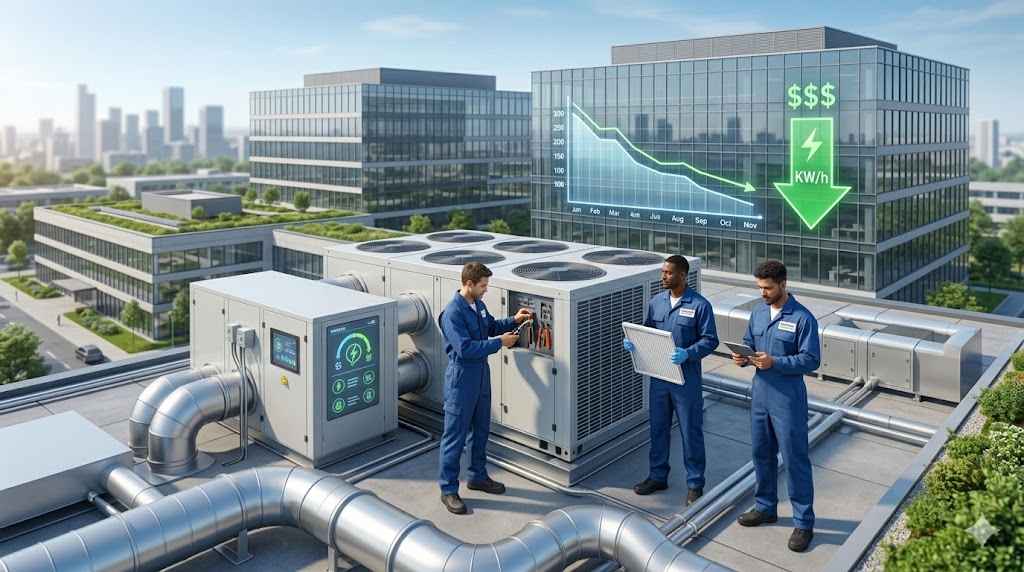
For businesses, controlling operational expenses is essential. Energy-efficient HVAC systems can lower utility bills and improve operational performance. This article explains how commercial HVAC services reduce energy use through efficient equipment, regular maintenance, and system optimization, and outlines practical strategies and potential savings.
Energy-Efficient Systems
Modern, energy-efficient HVAC equipment—high-efficiency furnaces, variable-speed air conditioners, and programmable or smart thermostats—reduces consumption while maintaining comfort. Integrating smart controls enables real-time monitoring and automatic adjustments for occupancy and weather, improving efficiency and workplace comfort. For more information on how to improve your HVAC systems, consider visiting H Pro Serve’s service page .
Regular Maintenance
Scheduled preventive maintenance keeps systems at peak efficiency, identifies issues early, extends equipment life, and preserves indoor air quality. Typical tasks—cleaning coils, verifying refrigerant charge, and checking ductwork—reduce system strain, lower energy use, and improve reliability.
HVAC Preventive Maintenance for Commercial Energy Savings
Technician training in HVAC preventive maintenance produces measurable energy savings in commercial and institutional buildings. The author provides technical consulting services to commercial and institutional clients.
Quantifying the energy benefits of HVAC maintenance training and preventive maintenance, 1999
System Optimization
Optimization begins with a performance assessment and targeted adjustments: sealing and insulating ductwork, aligning component operation, and applying advanced control strategies such as variable-speed drives and schedule-based controls. These measures reduce energy loss, improve comfort, and extend equipment life.
HVAC Optimization Strategies for Commercial Energy Efficiency
This study reviews strategies to optimize HVAC systems in commercial and industrial buildings, with emphasis on improving energy efficiency, system reliability, and reducing operational costs through effective management practices.
Optimizing HVAC efficiency and reliability: a review of management strategies for commercial and industrial buildings, MM Islam, 2024
Cost Savings
Upgrading to high-efficiency systems and following preventive maintenance can cut energy use and costs substantially; many installations report double-digit savings and improved payback when utility rebates or incentives apply. Long-term benefits include lower bills and extended equipment life.
Emergency Preparedness
Reliable service and rapid repairs reduce downtime and the costs tied to business interruption. Planning for emergency response helps keep operations resilient during outages.
Environmental Benefits
Lower energy use from efficient HVAC systems reduces greenhouse gas emissions and a company’s carbon footprint, supporting sustainability goals and enhancing market reputation.
Customized Solutions
Providers tailor systems to a facility’s size, operating hours, and budget to maximise efficiency and comfort. Proper configuration improves performance and user satisfaction.
What Are the Key Energy Efficient HVAC Upgrades for Commercial Buildings?
Several targeted upgrades can improve energy performance in commercial buildings:
- High-Efficiency Furnaces and Air Conditioners : Replace older units with more efficient models.
- Variable-Speed Compressors : Match capacity to demand for better efficiency.
- Smart Thermostats : Enable scheduled, occupancy-driven control.
These upgrades can materially reduce energy costs and improve system responsiveness.
Which HVAC System Components Offer the Greatest Energy Savings?
Certain components typically offer the strongest savings:
- High-Efficiency Furnaces : Higher fuel-to-heat conversion reduces bills.
- Variable-Speed Air Conditioners : Adjust output to match cooling demand.
- Programmable Thermostats : Cut conditioning during unoccupied periods.
Investing in these components improves consistency and lowers operating costs.
How Do HVAC Retrofits Contribute to Long-Term Energy Cost Reduction?
Retrofits bring older systems closer to current efficiency standards by adding advanced controls, improving insulation, and replacing obsolete parts. Over time, retrofits reduce consumption, lower operating costs, and enhance reliability.
How Does Preventive Maintenance Lower Commercial HVAC Energy Costs?
Preventive maintenance keeps systems efficient by identifying and correcting faults early. Key tasks—coil cleaning, refrigerant checks, and airflow maintenance—prevent energy waste and avoid costly repairs.
What Is the Impact of Regular HVAC Maintenance on System Efficiency?
Regular servicing ensures systems perform as designed, reducing energy use and extending equipment life. Early fault detection and maintained airflow improve efficiency and lower operating expenses.
How Can Maintenance Scheduling Optimize Commercial HVAC Energy Management?
A structured maintenance schedule sustains efficiency and reduces unexpected failures. Scheduling during off-peak hours minimises disruption and supports predictable budgeting.
What Role Do HVAC Energy Audits Play in Identifying Cost Savings?
Energy audits identify inefficiencies, quantify savings opportunities, and produce prioritized recommendations for upgrades and operational changes.
Commercial Building Energy Audits for Cost Reduction
The book addresses methods for conserving energy and reducing operating costs in residential and commercial buildings. It examines approaches to measuring and improving energy use in systems such as HVAC, lighting, and insulation.
Energy audit of building systems: an engineering approach, M Krarti, 2020
Audits give businesses a clear picture of energy use and help target improvements that deliver measurable savings.
How Are Energy Audits Conducted for Commercial HVAC Systems?
Audits typically combine a site inspection, data collection, and performance analysis to evaluate equipment efficiency, insulation, and airflow. The auditor issues a report with recommendations and estimated savings to guide decisions.
What Are the Typical Recommendations from HVAC Energy Assessments?
Common recommendations include upgrading to high-efficiency equipment, improving insulation (including ductwork), and implementing regular maintenance schedules to sustain performance.
How Can Smart Controls and Automation Enhance HVAC Energy Efficiency?
Smart controls enable real-time monitoring and automatic adjustments for occupancy and environmental conditions, reducing waste while maintaining comfort. Integrating building management systems and smart thermostats lets businesses fine-tune operation for efficiency.
What Are the Benefits of Smart Thermostats in Commercial HVAC Systems?
Smart thermostats offer optimized temperature control, remote access for adjustments, and learning capabilities that adapt settings to usage patterns, delivering energy savings and convenience.
How Does HVAC Zoning Improve Energy Management for Businesses?
Zoning divides a building into independently controlled areas so conditioning matches occupancy. Targeted control reduces energy spent on unoccupied spaces and improves comfort. To learn more about how H Pro Serve can assist with your commercial HVAC needs, contact us today.
Frequently Asked Questions
What are the signs that my HVAC system needs maintenance?
Uneven temperatures, unusual noises, rising energy bills, poor indoor air quality, visible dust, or persistent humidity commonly indicate a need for maintenance.
How often should I schedule HVAC maintenance for my business?
Schedule maintenance at least twice a year (spring and fall); larger or more complex systems may need more frequent visits.
What are the potential rebates for upgrading to energy-efficient HVAC systems?
Many utilities and government programmes offer rebates and incentives; availability varies by location and system type, so consult local providers.
How can I ensure my HVAC system is properly optimized?
Commission a professional energy audit, maintain ductwork and insulation, and upgrade controls where appropriate. Smart thermostats and zoning further refine operation.
What is the role of HVAC zoning in energy efficiency?
Zoning conditions only occupied areas, reducing wasted energy while maintaining comfort.
What are the long-term benefits of investing in energy-efficient HVAC systems?
Benefits include lower energy costs, better indoor air quality, improved comfort, longer equipment life, and potential rebates or incentives.
How do smart controls and automation contribute to HVAC efficiency?
They provide continuous monitoring and automatic adjustments tied to occupancy and conditions, improving control and lowering consumption.
Conclusion
Implementing energy-efficient HVAC measures—upgrades, preventive maintenance, and optimization—delivers cost savings, improved comfort, and environmental benefits. Prioritising these actions supports reliable, efficient operation and sound investment decisions. To discuss HVAC solutions tailored to your business, contact us today.