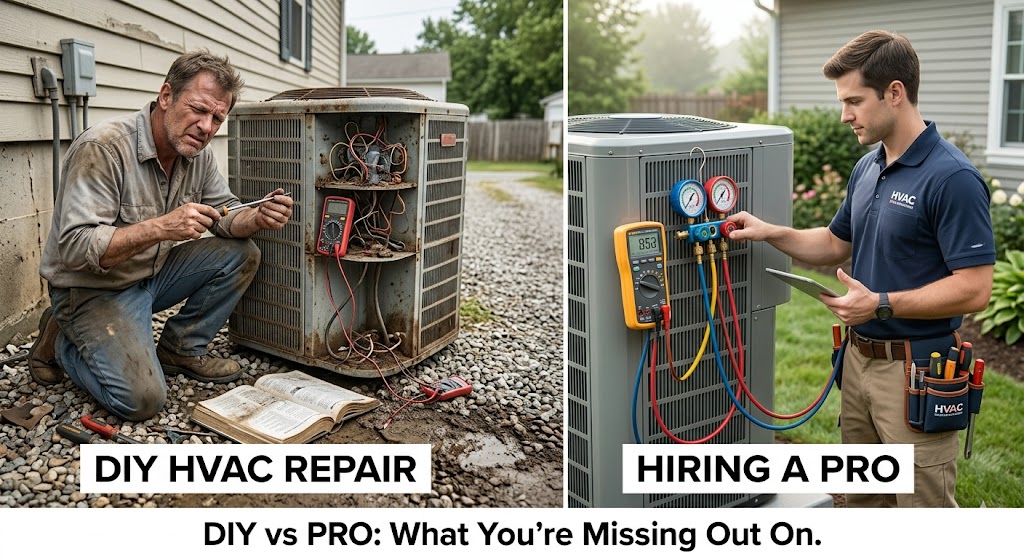
Homeowners often choose between DIY HVAC repairs and hiring a technician. This article compares the two, highlights common DIY pitfalls and safety risks, and explains the benefits of certified technicians. It outlines hazards, warranty considerations, and tips for selecting a reliable HVAC service company.
Many households must weigh the option of performing home repairs themselves against hiring a professional.
The Role of DIY in Home Repair Decisions
Do-it-yourself (DIY) activity is common in many households, but the extent to which basic repair tasks are performed as DIY and the factors that drive the choice over hiring a contractor are not well-documented. These factors influence the frequency and scope of DIY work versus professional engagement.
Analyzing reliability and cost factors of an HVAC system considering warranty implications, Shivani, 2025
Professional HVAC Repair Services: Why Hiring a Pro Outweighs DIY HVAC Repairs
Professional HVAC technicians bring training, hands-on experience, and standard procedures to diagnose and fix complex faults across system types. They commonly provide warranties and follow codes, giving homeowners protection and peace of mind that DIY work usually lacks.
What Are the Risks of DIY HVAC Repairs?
DIY repairs can cause component damage, costly follow-up work, and safety hazards such as gas leaks or electrical faults. Inexperience raises the likelihood of system failure and occupant danger.
How Can DIY Repairs Cause System Damage and Safety Hazards?
Poorly executed DIY work can reduce efficiency, trigger breakdowns, or create fire and leak risks. Incorrect parts or skipped safety steps increase the chance of accidents.
When Does DIY Repair Void Your HVAC Warranty?
Many warranties require authorized technicians; unauthorized repairs can void coverage and leave owners responsible for full repair costs. Check warranty terms before attempting work.
Further research highlights the close relationship between system reliability, repair costs, and warranty compliance.
HVAC System Reliability, Cost, and Warranty Analysis
This study examines the interaction among reliability metrics, cost factors, and warranty implications for a Heating, Ventilation, and Air Conditioning (HVAC) system. The research evaluates system performance using failure data, repair cost analysis, and warranty conditions. Key parameters considered include reliability, availability, maintainability, mean time to failure (MTTF), mean time between failures (MTBF), mean time to repair (MTTR), cost estimation, and warranty period.
Analyzing reliability and cost factors of an HVAC system considering warranty implications, Shivani, 2025
What Are the Benefits of Hiring Certified HVAC Technicians?
Certified technicians offer formal training and field experience to deliver industry-standard repairs, keep systems efficient, and recommend energy-saving upgrades that can lower utility costs and environmental impact.
Demand for skilled HVAC professionals remains strong, reflecting the specialised knowledge required for effective repair and maintenance.
HVAC Technician Skills & Repair Career Outlook
ABSTRACT: Many repair occupations, from auto mechanics to HVAC technicians, require practical repair skills. For jobseekers with appropriate skills, repair careers offer several advantages. Repair work supports millions of jobs across the United States. Wages in many repair occupations are above average, and the employment outlook is often positive. Most repair roles do not require a four-year college degree. However, modern repairers need more than mechanical ability; mathematics and written communication are useful, and those who keep up with technology typically have an advantage.
Fix-It Careers: Jobs in Repair., 2010
HProServe is a professional HVAC provider serving residential and commercial customers for repair, maintenance, and installation, focused on system efficiency and reliability.
How Do Professional Services Ensure System Efficiency and Longevity?
Scheduled maintenance and inspections let technicians catch issues early, clean and tune components, and run diagnostics to extend equipment life and improve reliability.
How Does the Cost of Professional HVAC Repair Compare to DIY?
DIY work may seem cheaper up front, but mistakes can increase long-term costs. Professional repairs cost more initially but reduce repeat failures and emergency calls.
What Are the Long-Term Savings of Professional HVAC Maintenance Plans?
Maintenance plans help prevent major breakdowns, extend system life, lower energy bills, and limit unexpected repair expenses.
How Do Emergency Repair Services Affect Overall Costs?
Emergency service often carries premium rates and expedited parts fees. Regular maintenance reduces sudden failures and the need for costly emergency responses.
How to Choose the Right HVAC Service Company Near You?
Selecting the right HVAC company is essential for dependable repairs and maintenance. Evaluate providers using clear criteria to ensure quality and accountability.
- Licensing and Certifications: Confirm the company is licensed and technicians are certified.
- Experience and Reputation: Seek a proven track record and positive customer reviews.
- Transparency and Communication: Expect clear estimates and open communication throughout the process.
What Credentials and Certifications Should You Look For?
Verify technicians’ training and certifications from recognized organisations to ensure safe, standard-compliant repairs.
For immediate assistance or to schedule a consultation, you can contact HProServe today.
How Do Clear Communication and Customer Support Impact Service Quality?
Clear communication and strong customer support improve service quality by providing accurate estimates, timely responses, and answers that build trust throughout the service process.
To explore available options, visit HProServe services and see how they can meet your HVAC needs.
Frequently Asked Questions
What tools are essential for DIY HVAC repairs?
Basic tools include a multimeter, screwdrivers, wrenches, and pliers. Refrigerant work requires gauges and a vacuum pump. Use personal protective equipment like gloves and goggles. Many repairs still need professional skills.
How can I tell if my HVAC system needs professional attention?
Seek professional service for unusual noises, uneven temperatures, rising energy bills, frequent cycling, or failure to heat or cool. Strange odors or visible leaks also warrant a call.
What should I expect during a professional HVAC service visit?
A service visit typically includes inspection, component cleaning, diagnostic testing, and a clear report with recommended repairs or maintenance.
Are there any DIY HVAC repairs that are safe to attempt?
Safe tasks include replacing air filters, cleaning vents, checking thermostat settings, and clearing debris from outdoor units. Electrical work, refrigerants, and complex mechanical repairs should be handled by certified technicians.
How can I improve the energy efficiency of my HVAC system?
Improve efficiency by changing filters, cleaning coils, sealing ductwork, verifying insulation, and installing a programmable thermostat. Consider upgrading to energy-efficient equipment when appropriate.
What are the common misconceptions about DIY HVAC repairs?
Common myths are that DIY is always cheaper or simple. Mistakes can be costly, may void warranties, and often require specialized tools or knowledge.
Conclusion
Choosing professional HVAC service improves safety, preserves warranties, and often saves money long-term through reliable repairs and maintenance. Contact a trusted HVAC provider for dependable service.