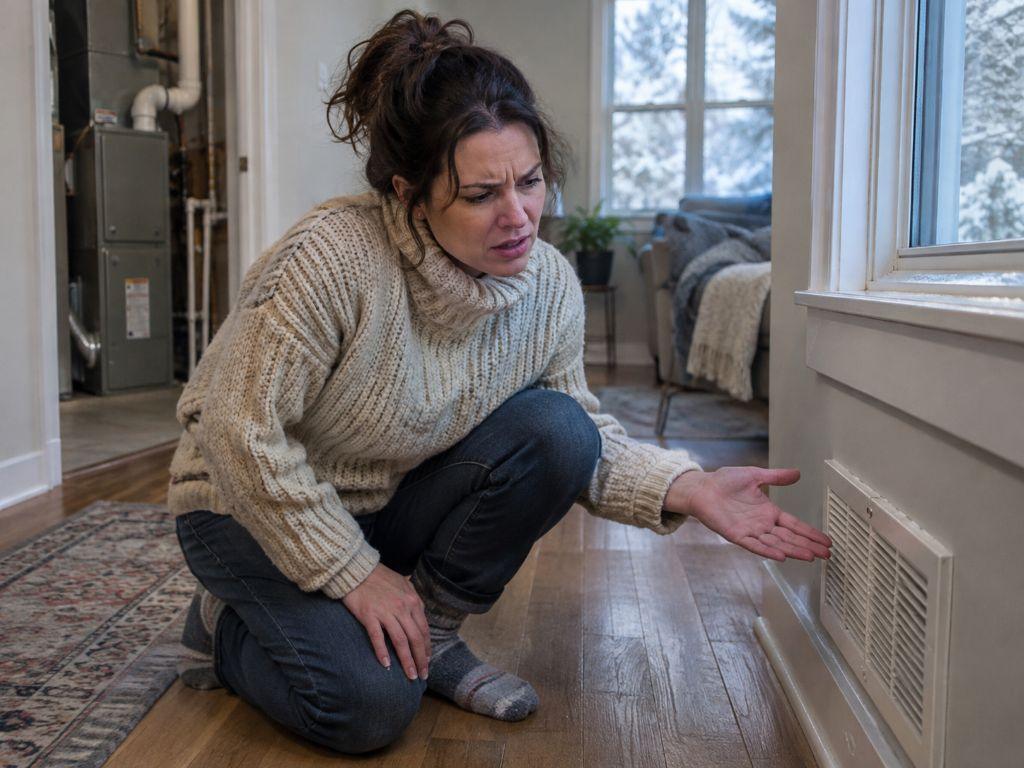
You turn up the thermostat on a cold Portland morning, hear the furnace start, and then feel cool air coming out of the vents. A furnace blowing cold air is one of the most common heating complaints, and the cause is often simple. Sometimes it is a setting or a dirty filter. Other times it points to a part that has failed and needs a technician.
This guide explains the most common reasons a furnace blows cold air, the safe checks you can do yourself, and the signs that mean it is time to call a professional. Read it before you spend a cold evening guessing.
Quick Take
- Cold air from a furnace is often caused by a thermostat setting, a dirty filter or an ignition problem.
- Check the simple items first. If the furnace still blows cold air, or you smell gas, stop and call a technician.
Why a Furnace Blows Cold Air
A furnace heats air by burning fuel or running electric heating elements, and then a blower pushes that warm air through the ducts. Cold air at the vents means one of two things: the heat is not being produced, or the heat is being lost before it reaches the room. Most cases fall into a handful of causes.
- Thermostat fan set to ON. If the fan is set to ON instead of AUTO, the blower runs all the time, including between heating cycles. You feel cool air when the burners are off.
- Dirty air filter. A clogged filter restricts airflow. The furnace can overheat and shut the burners off as a safety step while the blower keeps running.
- Ignition or pilot problems. A furnace that cannot light its burners will still run the blower. Older furnaces use a pilot light, and newer ones use an electronic igniter that can wear out.
- Dirty or failed flame sensor. The sensor confirms that a flame is present. If it is coated with residue, it shuts the gas off a few seconds after ignition.
- Gas supply or power issue. A closed gas valve, a tripped breaker or a blown fuse can stop the furnace from heating.
- Clogged condensate drain. High-efficiency furnaces produce condensation. If the drain backs up, a safety switch can stop the heat.
- Leaking or disconnected ducts. The furnace may heat properly, but the warm air is lost in an attic or crawl space before it reaches the room.
Easy Checks You Can Do Yourself
Before you call anyone, a few checks take only a few minutes and need no tools. Stay away from the gas line and from any panel that needs a screwdriver to open.
- Check the thermostat. Set it to HEAT and the fan to AUTO, and set the temperature a few degrees above the room temperature. Replace the batteries if the display is dim. A programmable or smart thermostat can also have a schedule or hold setting that overrides your change.
- Check the filter. Slide it out and hold it up to the light. If you cannot see through it, replace it.
- Check the breaker. Look for a tripped breaker for the furnace and reset it once. If it trips again, stop and call a technician.
- Check the furnace switch. Many furnaces have a wall switch near the unit that looks like a light switch. Someone may have turned it off by accident.
- Check vents and registers. Make sure they are open and not blocked by furniture or rugs.
- Look at the condensate line. If you see water around a high-efficiency furnace, the drain may be clogged. Do not open the cabinet.
Give the furnace several minutes after any fix. If warm air does not appear, move on to the next section instead of repeating the same steps.
Common Causes at a Glance
This table matches the symptom you notice with the most likely cause and who should handle it.
| What you notice | Likely cause | Who handles it |
|---|---|---|
| Fan runs, air feels cool between heating cycles | Thermostat fan set to ON | You |
| Weak airflow, then cold air | Dirty air filter | You |
| Furnace clicks but no flame appears | Ignition or pilot problem | Technician |
| Flame starts, then shuts off after a few seconds | Dirty or failed flame sensor | Technician |
| Water around a high-efficiency furnace | Clogged condensate drain | Technician |
| Furnace is warm but some rooms stay cold | Leaking or disconnected ducts | Technician |
| Nothing runs at all | Power or gas supply | You first, then a technician |
When Cold Air Points to a Bigger Problem
Some causes need a professional. A failed igniter, a bad flame sensor, a worn blower motor or a cracked heat exchanger cannot be fixed safely at home. A technician checks ignition, safety controls, airflow and the thermostat, explains what failed, and gives you a clear estimate before starting. You can see what that service includes on our heating services page.
If you smell gas, leave the home and call your gas utility or 911 before anything else. If a carbon monoxide alarm sounds, leave the home and call 911. Do not try to restart the furnace in either case.
Ductwork can also be the hidden problem. If the furnace runs normally but some rooms stay cold, warm air may be escaping through leaks or a disconnected section. A technician can inspect your ductwork and tell you what needs repair.
Gas Furnace vs. Electric Furnace: Does It Change the Cause?
The type of furnace you own changes which causes are likely. A gas furnace relies on a burner, an igniter or pilot, a flame sensor and a gas valve, so most cold-air problems trace back to ignition or flame detection. An electric furnace has no burner at all. It uses heating elements, and cold air usually means a failed element, a tripped limit switch or a power problem at the unit.
Heat pumps with electric backup add another wrinkle. In mild weather a heat pump delivers air that feels only lukewarm compared with a gas furnace, which is normal. If the air feels truly cold and the system never warms up, the backup heat or the heat pump itself may need service. Knowing which system you have helps you describe the problem accurately when you call.
What to Tell the Technician
A clear description saves time and money. Before the visit, write down when the problem started, whether it happens all the time or only at startup, whether you hear clicking, banging or humming, and whether any error light is blinking on the furnace control board. Note the age of the furnace and when the filter was last changed.
These details help the technician narrow the cause quickly. A clicking sound with no flame points toward ignition. A short burn followed by shutdown points toward the flame sensor or airflow. Warm rooms mixed with cold rooms points toward ducts. You do not need to diagnose anything yourself, only to describe what you notice.
How to Prevent Cold Air Problems
Most cold-air complaints can be avoided with a few habits that cost very little.
- Change the filter on schedule. Check it monthly during the heating season and replace it when it looks dirty.
- Schedule a tune-up before winter. A yearly check catches worn igniters, dirty sensors and weak parts before the first cold snap.
- Keep the area around the furnace clear. Do not store boxes, paint or cleaning products next to it.
- Keep the thermostat fan on AUTO unless you have a reason to run it constantly.
- Plan for replacement. A furnace near the end of its life breaks down more often. A technician can tell you plainly whether repair or replacement makes more sense.
If your furnace has started blowing cold air more than once, treat it as a sign to have the system looked at, not as a one-time quirk.
Frequently Asked Questions
Why is my furnace blowing cold air when the thermostat is set to heat?
Common reasons are the fan set to ON, a dirty filter, an ignition problem or a flame sensor that shuts the burners off. Check the thermostat and the filter first.
Is it normal for a furnace to blow cold air at startup?
A short burst of cooler air can happen as the furnace starts and the heat exchanger warms up. If it lasts more than a minute or two, or keeps happening, something is wrong.
Can a dirty filter make a furnace blow cold air?
Yes. A clogged filter restricts airflow and can cause the furnace to overheat and shut the burners off while the blower keeps running.
Is a furnace blowing cold air dangerous?
Cold air alone is not dangerous, but a gas smell or a carbon monoxide alarm is. Leave the home and call 911 or your gas utility.
Should I repair or replace a furnace that blows cold air?
It depends on the cause and the age of the furnace. A technician can explain both options and give you a clear estimate on each.
Ready to Get Started?
If your furnace is still blowing cold air, HomePro Heating & Air can find the cause and give you a clear estimate before any work begins. Contact Us